

Success Stories
An open innovation hub where diverse players gather The future of life sciences, connected through co-creation by "Shonan iPark"
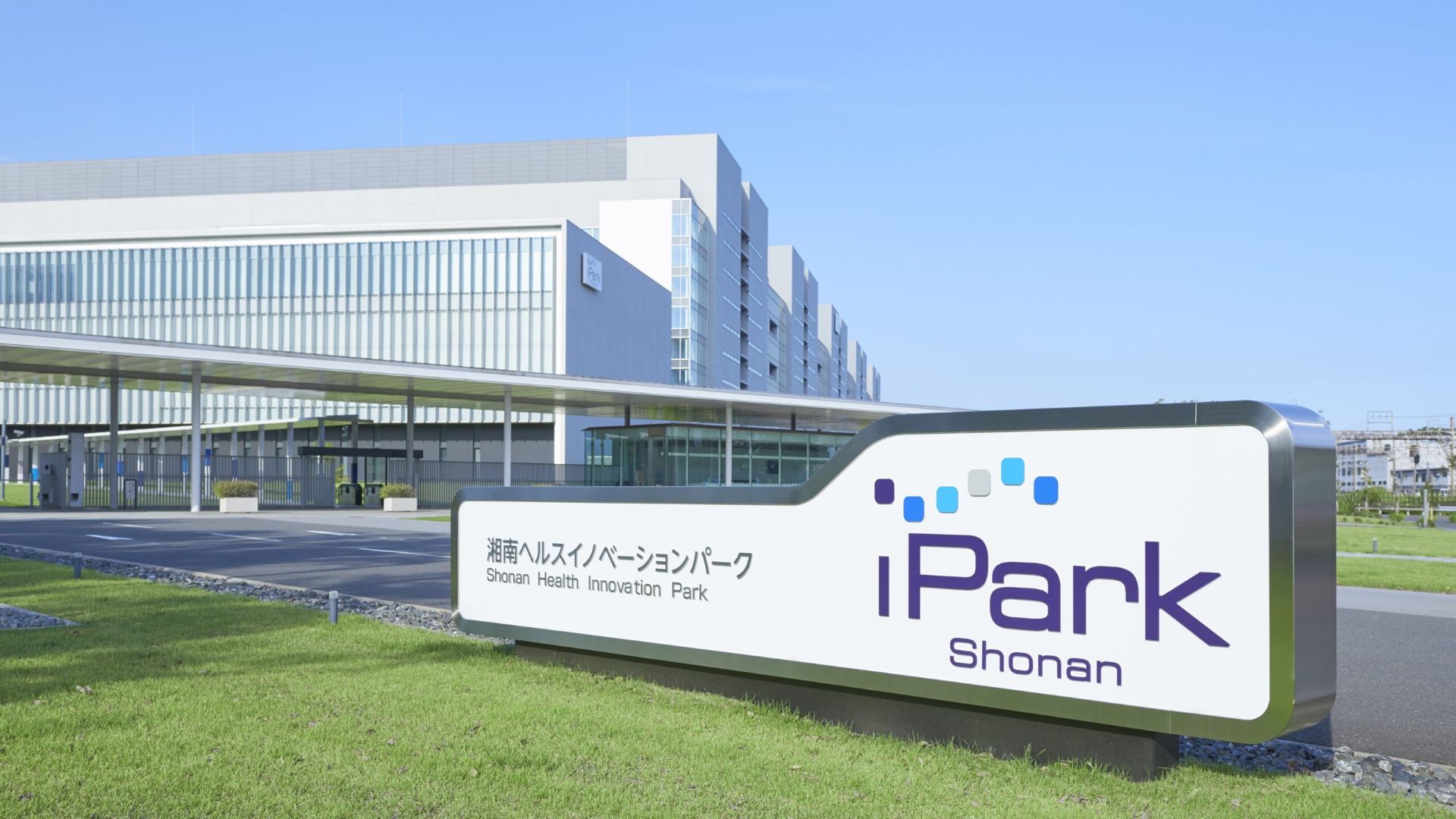
This time, we will introduce Shonan Health Innovation Park (commonly known as "Shonan iPark"), where life science-related companies are concentrated.
Shonan Health Innovation Park
Established in 2018, when Takeda Pharmaceutical Company opened its research center to external partners, this is Japan’s first science park originating from a pharmaceutical company. Around 220 companies and approximately 3,500 people, engaged in fields such as next-generation medicine, AI, and cellular agriculture, are based in and participate in the park, forming a vibrant ecosystem. Operated by the iPark Institute—staffed with professionals well-versed in the life science business—the park supports the acceleration of research and serves as a bridge toward practical application, guided by the vision of “social implementation of innovative ideas.”
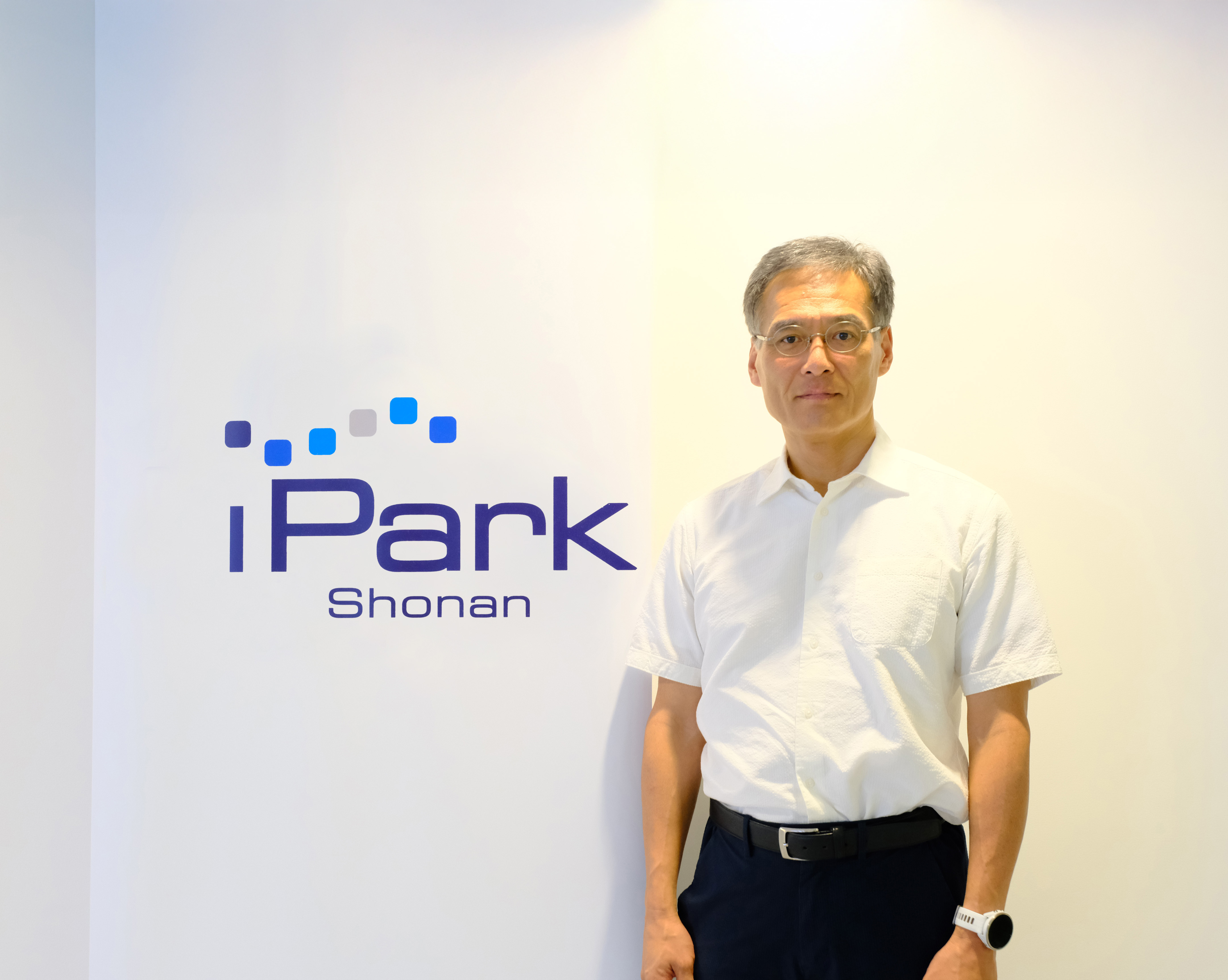
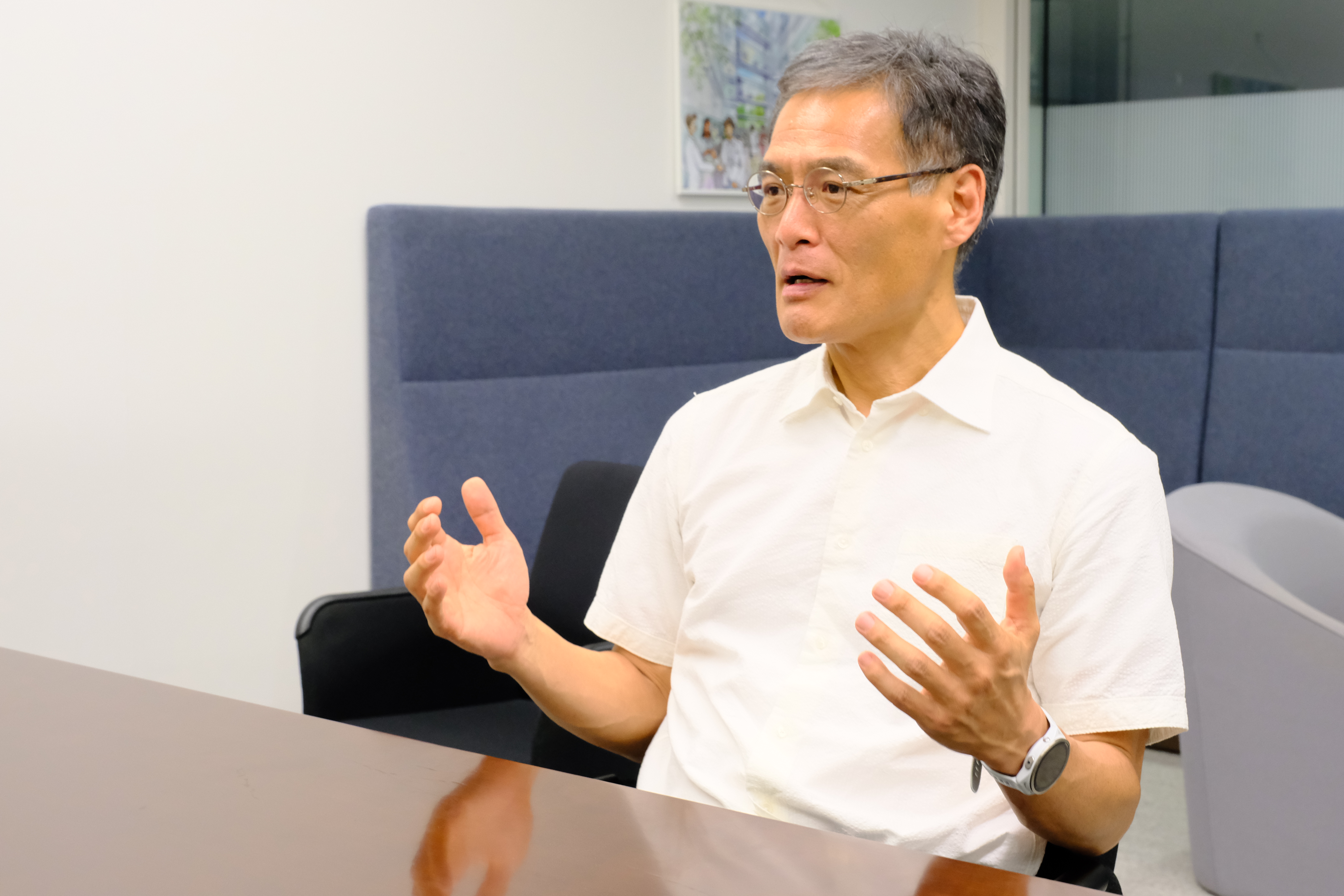
Chief Executive Officer
Mr. Toshio Fujimoto
(Note) Cellular Agriculture: A method of producing products that are originally harvested from animals or plants by culturing specific cells.
Trust born from an independent and neutral hub and environment
Shonan Health Innovation Park (Shonan iPark) is a science park established in 2018 by Takeda Pharmaceutical Company by opening its own research laboratory to the outside. Amidst the diversification of research and development in the pharmaceutical industry, it was born from a desire to create an open innovation hub centered on "co-creation" in order to tackle challenges that are difficult for a single company to solve.
IPark Institute Co., Ltd., which is responsible for operations, initially started as a division of Takeda Pharmaceutical Company, but achieved full independence in 2023 to maintain neutrality within the pharmaceutical industry. Currently, it operates the facility from a position that does not belong to any specific company, providing an environment where various organizations—such as pharmaceutical companies, research equipment manufacturers, universities, and startups—can participate without barriers.
The facility is located in the hilly area of Fujisawa City, Kanagawa Prefecture, and is characterized by a peaceful environment surrounded by the sea and greenery. While it is within commuting distance by train from central Tokyo and Yokohama City, it is equipped with facilities that allow for concentration on cutting-edge research. Currently, approximately 3,500 people are active here, and it functions as a research hub centered on experimentation.
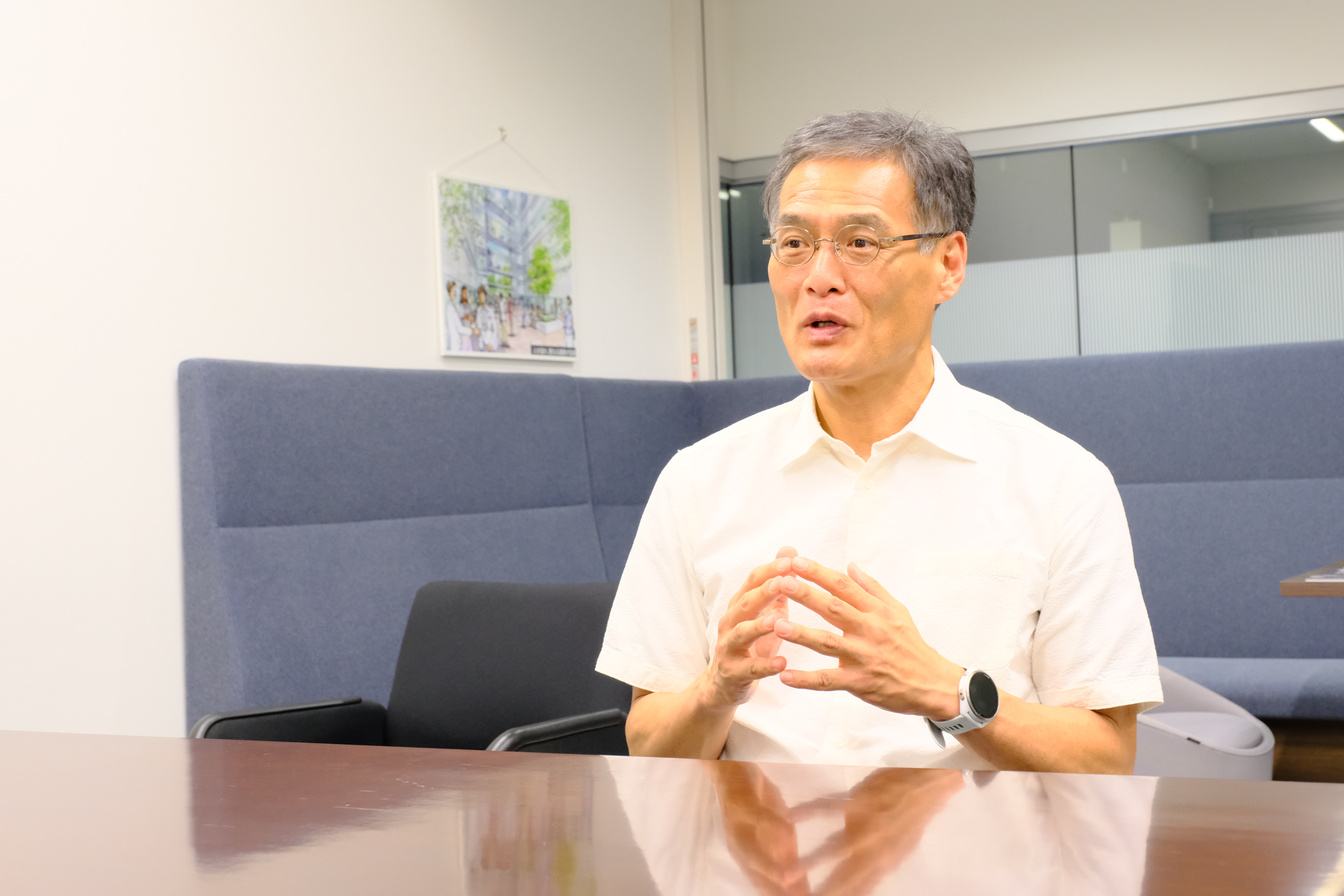
Creating a mechanism to generate co-creation
Our definition of "co-creation" goes beyond simple joint research and means creating new ideas through the intersection of people from different fields and positions. Currently, about 220 companies and organizations are tenants, and the backgrounds of the researchers are truly diverse. In particular, for startups, which account for about 40% of the tenant companies, being able to use rental labs equipped with research facilities on par with those of pharmaceutical companies is a significant advantage.
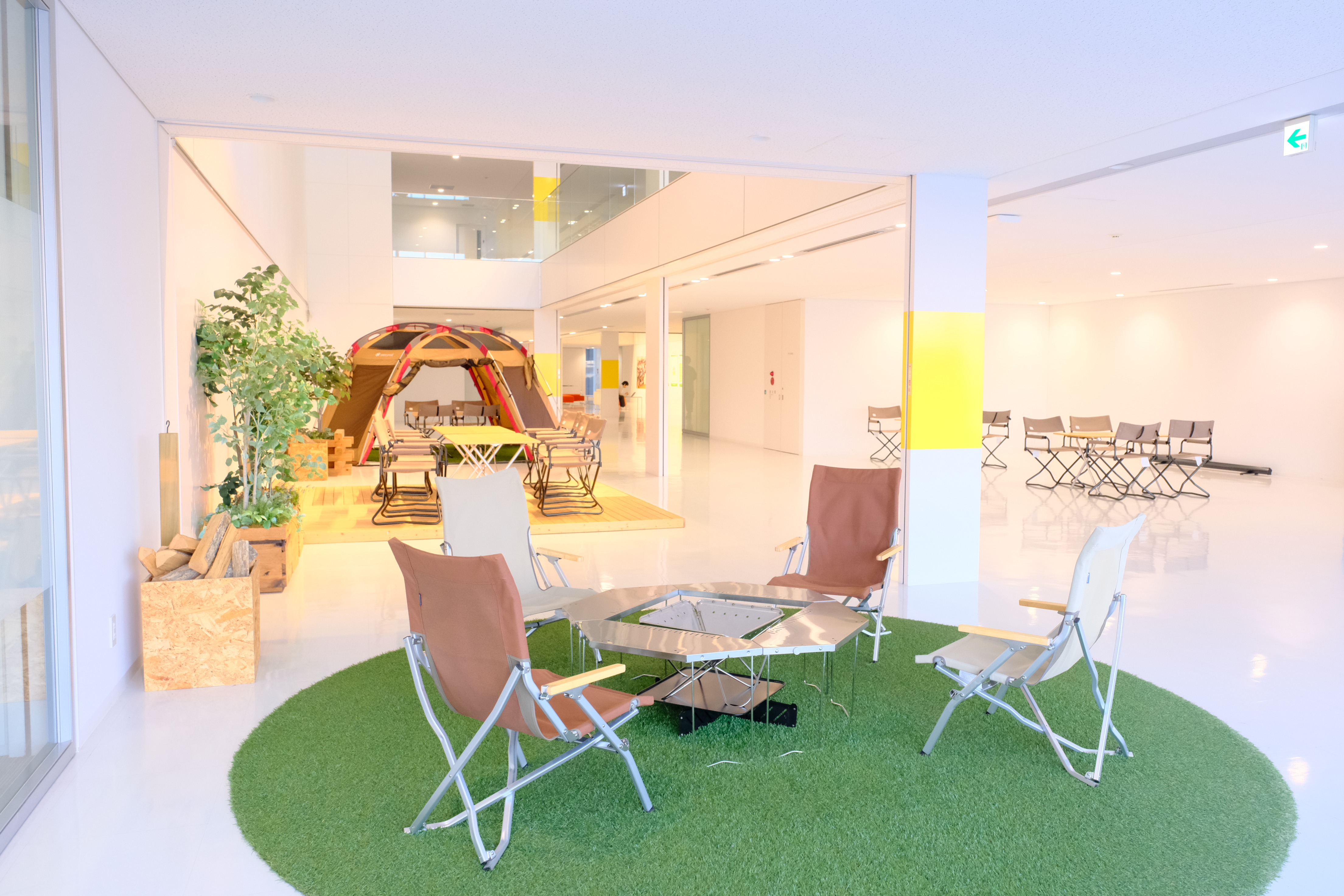
In this facility, we regularly plan and hold seminars and events to encourage interaction between researchers. Additionally, we have provided spaces throughout the facility where people can "sit down for a moment and talk," creating a setup that fosters natural communication. This environment serves as a catalyst for researchers from different fields and industries to connect, and it is not uncommon for joint research or new projects to be born from these "accidental encounters."
We believe that not only the enhancement of facilities but also the creation of mechanisms where people naturally interact is the key to realizing co-creation, and that this is an important role for the facility management side.
Toward becoming an "Asian Hub" that fosters co-creation across borders
At the time of its establishment, we were searching for a direction for facility operation while modeling it after the life science ecosystem in the Boston area of the United States and keeping collaboration with the Boston area in mind. However, partly due to the difference in our respective levels of maturity, through repeated trial and error, we are currently focusing on collaboration with the Asian region.
In recent years, triggered by connections with South Korean government agencies such as the Ministry of SMEs and Startups, South Korean bio-startups have become tenants at this facility. These relationships developed from local networks formed during study visits to Boston, and the international network built through those visits is now beginning to lead to co-creation in Shonan. Additionally, South Korean government agencies are very quick in their decision-making; several startup companies have already completed their move-in, and the participation of new companies is planned for the future.
Through such international collaboration, we intend to further strengthen our role as a co-creative life science hub in Asia. Furthermore, we are promoting collaboration not only through physical tenancy but also online, advancing the creation of an environment where researchers and companies from around the world can engage in co-creation across distances.
Changing global medicine from Shonan through co-creation
Our mission is to "build a life science ecosystem open to the world." Now, seven years since its opening, various players including domestic and international companies, researchers, universities, and government agencies gather at this site, and collaboration in research and business is conducted on a daily basis.
We have received many comments from researchers such as, "I feel inspired when I come here," and "Listening to stories from different fields broadens my ideas." Every day, we feel that this is growing into a place where researchers can take on challenges with peace of mind and enhance each other's potential.
Moving forward, we will further develop the mechanism of co-creation by combining physical and online elements, and proceed with creating an environment where a more diverse range of entities can participate. While utilizing the characteristics of the Shonan region, our mission is to expand the circle of co-creation as a hub for research and business that connects with the world.
(That is the end of the interview article.)
Editor's Note
Kanagawa Prefecture has a concentration of research and development institutions, and the number of employees in academic, development, and research institutions working within the prefecture is the highest in the country as of 2021. Additionally, globally renowned corporations and companies with superior technical capabilities have established their R&D bases within the prefecture.
Inside the prefecture, in addition to Shonan iPark introduced this time, life science-related ecosystems have been formed, such as the Life Innovation Center (Kawasaki City, Kawasaki Ward) and Kanagawa Science Park (Kawasaki City, Takatsu Ward), providing an environment where companies can easily develop their businesses while pursuing open innovation.
By utilizing such a business environment, it is expected to attract companies from both Japan and overseas and promote the revitalization of the regional economy.